


How Long Does a High-End Outdoor Kitchen Last
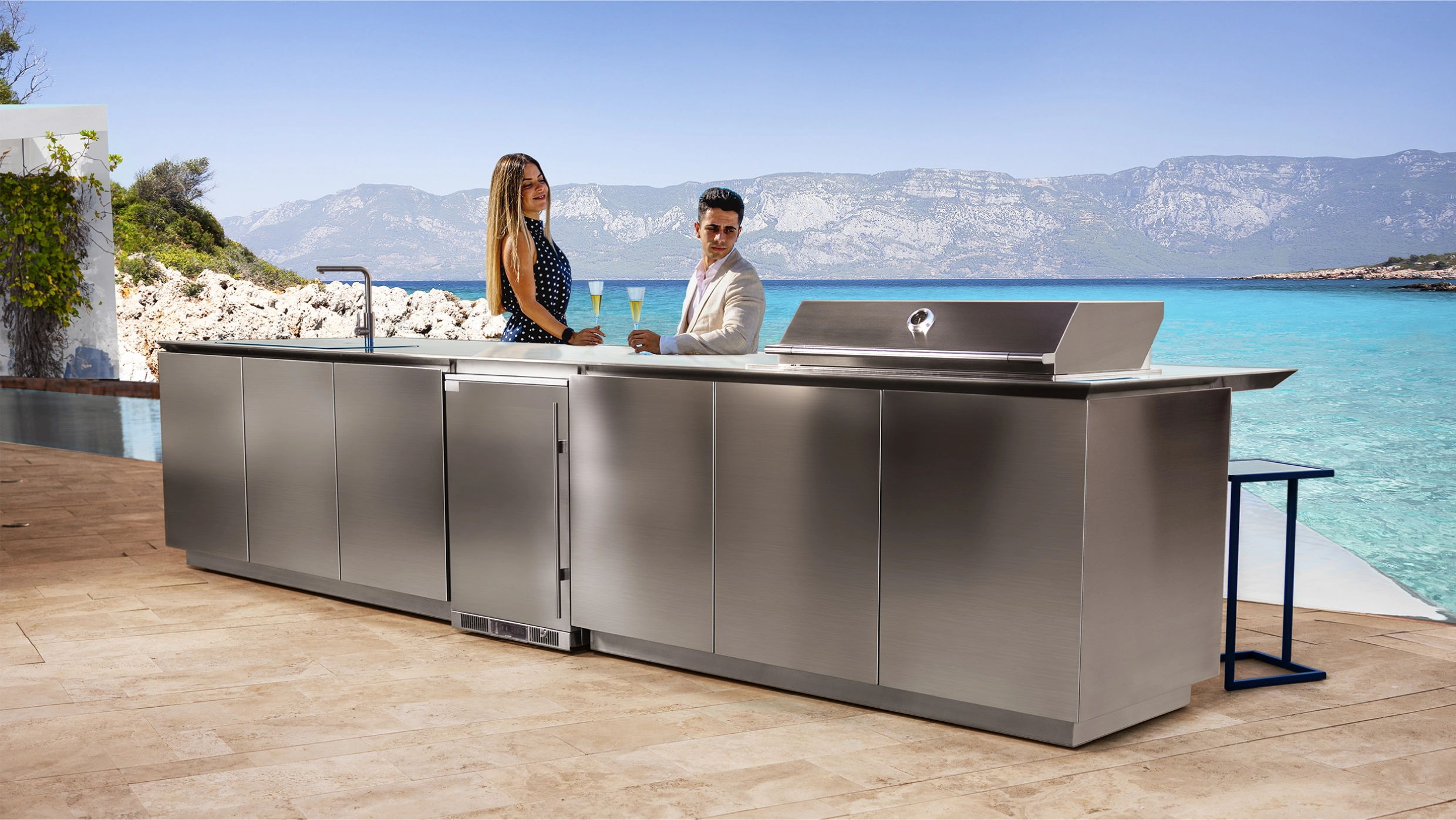
What is the lifespan of a luxury outdoor kitchen? In fact, it is a somewhat misleading question. If you are planning to invest in your outdoor kitchen and construct it in accordance with the appropriate specifications, It is our goal that your kitchen will last for the duration of your lifetime. It may require periodic maintenance.
However, this is not always the case. The lifespan of an outdoor kitchen is contingent upon a number of factors, including the materials used, your geographical location and the intended use.
Furthermore, the response will vary depending on the precise question being asked. Are you interested in determining the projected lifespan of your kitchen? Or, perhaps, you are interested in the projected lifespan of your kitchen and the point at which you will need to consider replacements and repairs. Or perhaps you are enquiring as to the projected lifespan of the components, and the point at which replacement may be necessary.
As can be seen, there is no single answer to this question, and there are a number of different ways in which it can be interpreted.
Let us examine how different building materials can be prone to damage and how to ensure your island has the longest possible lifespan.
We will begin by examining how the construction of your outdoor kitchen affects the lifespan of your outdoor kitchen
In fact, it is a somewhat misleading question. If you are planning to invest in your outdoor kitchen and construct it in accordance with the appropriate specifications, It is our goal that your kitchen will last for the duration of your lifetime. It may require periodic maintenance.
However, this is not always the case. The lifespan of your kitchen is contingent upon a number of factors, including the materials used, your geographical location and the intended use.
Furthermore, the response will vary depending on the precise question being asked. Are you interested in determining the projected lifespan of your kitchen? Or, perhaps, you are interested in the projected lifespan of your kitchen and the point at which you will need to consider replacements and repairs. Or perhaps you are enquiring as to the projected lifespan of the components, and the point at which replacement may be necessary.
Durability and Materials in Outdoor Kitchens
Mistakes to avoid when buying your outdoor kitchen
Outdoor Kitchen Frame: How Long Does It Last?
To begin with, the fundamental structure of your outdoor kitchen is the framework of your island. It is therefore essential that the framework is robust and long-lasting.
It is possible that other elements of your outdoor kitchen may require replacement or repair at some point. However, this can be easily addressed as long as you have a robust base framework in place. In the event of a break, rot or corrosion to the framework, the entire structure will be rendered useless.
To ensure the longevity of your frame, it is essential to select the appropriate materials from the outset. This will help to avoid any issues in the future.
Wooden outdoor kitchen frame
While wood can last a long time in the right circumstances, it is not a material that can be relied upon to do so. Wood is a common material used in the USA for outdoor kitchen frames due to its cost-effectiveness and ease of workability. However, it can also present a number of challenges, which we will elaborate on below.
It is less common in Europe to use wooden structures for outdoor kitchens, as an economical option may be to use brick or concrete.
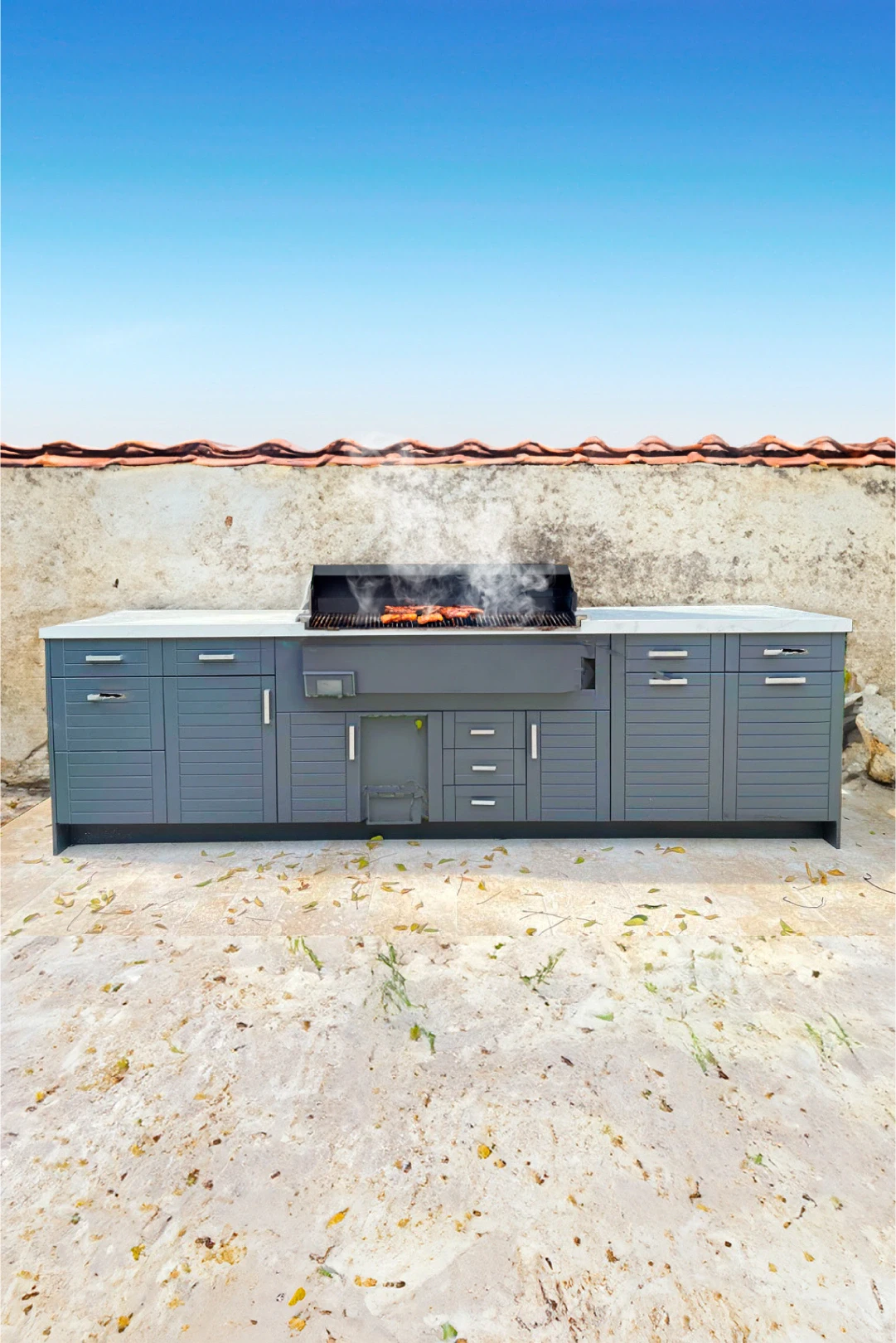
Wooden Outdoor Kitchen Frame
The first issue to be aware of with wood is the risk of termites.
Secondly, wood can become damaged if it gets wet.
Thirdly, wood is a combustible material.
If your wooden outdoor kitchen is equipped with appliances, the wood can catch fire, which would significantly reduce the lifespan of your summer kitchen and present a major safety concern for you and your loved ones.

Metal Outdoor Kitchen Structures: Real Lifespan
Metal structures for outdoor kitchens are more robust than those constructed from wood. It should be noted that while these structures are fire-resistant, moisture can still cause damage. Galvanized steel is a popular choice of material for the construction of outdoor kitchen structures.
Is Aluminum Good for an Outdoor Kitchen?
It is not advisable to use aluminum in an outdoor kitchen for a number of reasons. Firstly, it should be noted that the mechanical strength of aluminum is much lower than that of painted or galvanized iron.
Secondly, it is not capable of withstanding high temperatures, which is a disadvantage in an outdoor setting where barbecues are often used. This is why it is susceptible to warping.

contemporary outdoor kitchen
Thirdly, should you choose this option, it is important to be aware that it is prone to scratching. Furthermore, aesthetic damage can occur shortly after its installation.
Fourthly, it should be noted that aluminum itself oxidizes. In the event of contact with food, contamination is a distinct possibility, which could have serious implications for your health and that of your family. It is important to note that aluminum oxide has a color very similar to that of aluminum. This can result in confusion, as it is often mistaken for ambient dust. This is a potential concern, as it may lead to the inadvertent inhalation of the oxide, which could have health implications. This is why aluminum is often painted.
If the frame base structure or furniture of your outdoor kitchen is made of painted aluminum, it is susceptible to wear and tear due to rubbing and friction with plates, trays, kitchen utensils, cutlery, etc.
The same principle applies to outdoor kitchens. If all the items are left on the hood of a car, after a month the paint and finish will be damaged. In fact, if a scratch occurs in a certain place on the structure or furniture of your outdoor kitchen, the basic metal will rust. Some outdoor kitchen units are made of aluminum because it is economical and easy to work with.
What is the Best Material for an Outdoor Kitchen?
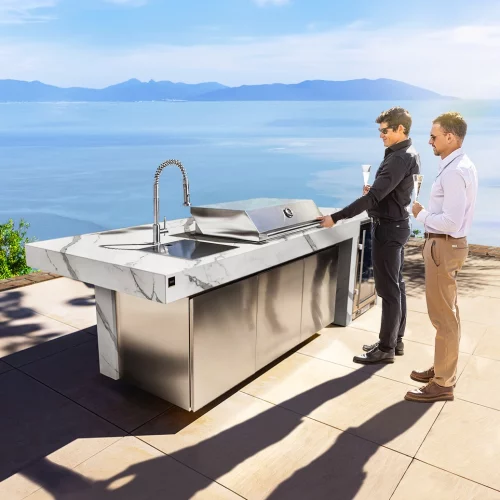
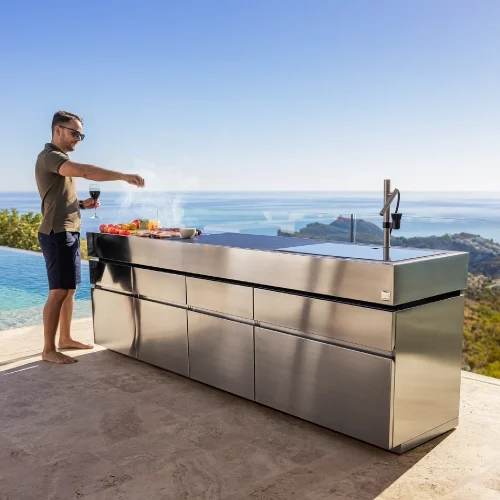
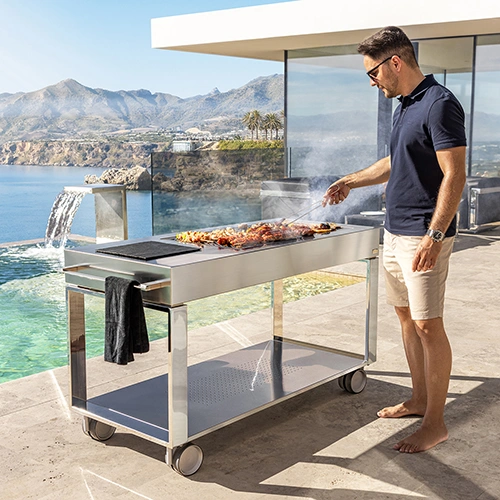
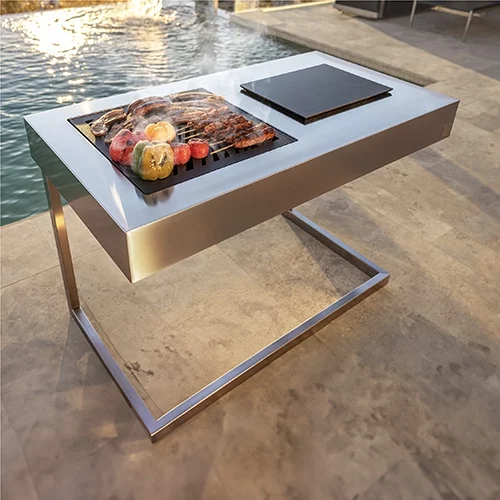
To eliminate the shortcomings of aluminum, restaurant kitchens which are used for heavy work are constructed with AISI 304 or AISI 316 stainless steel, as this is the optimal material for achieving a hygienic and durable outdoor kitchen.
Stainless steel 304 and 316 is a highly sophisticated material, making it challenging to work with. The material requires machinery with greater power and specialization than that used for aluminum or iron, due to its significantly higher strength. The product is much more resistant to wear and friction, resulting in a superior end product.